

The purpose of our show is to bring information and solutions to issues that impact the day-to-day lives of minorities.We can bring this value add by leveraging the knowledge of our host, Walter Latham, Sr. , co host Ernest Robinson, Marine Sergeant (Ret) , Briggette Stokes former teacher (ret). and subject matter experts where necessary.
Episodes

4 days ago
4 days ago
8 min
The Protest in France, Spain, and Portugal, highlights the need for us to pay attention. They are fighting for basic needs, i.e.. food, education, high food prices, among other things. Do you think that this will happen here?
Since we released this episode on 7/24/19, nothing has changed! What is the most important lesson that we keep getting hit over the head with? Without struggle, there is no freedom!
It has always puzzled me why we have not been to able effect change utilizing our right to assemble and protest peacefully. Why is that other groups can come together and protest and produce change or compromise. The only difference that is evident to me is perseverance, consistency, and being relentless.
What is the difference between them and us? Well, to be perfectly honest note the following
- Consistency
- People not participating
- People losing interest
- People burying their heads in the sand
- People afraid that they will lose their jobs
- Lack of group cohesion (this has killed us)
- Failure to develop an agenda
- Execution of that agenda
The issues facing the Black American run deep and cannot change without refusing to accept the status quo.
Just look around you, other groups have lost respect in our ability to stand up and call out these issues that face us. What is 1000 protesters when we have over 35 million Black Americans in this country. We can’t afford to just sit here and take it. Aren’t you tired? Or do you think God is going to change things for the better? We have to make the sacrifices. Nothing has been gained without sacrifice.
Please Subscribe, Like, and Share this podcast.
Instagram: @thewaltweekly
Website: TheWaltWeekly.com
FB: The Walt Weekly Podcast

Oct 13, 2026
Oct 13, 2026
50 min
Walter and Briggette interview Mayor Tina Brown of Robersonville, North Carolina.
When Mayor Brown took office, Robersonville faced critical financial dysfunction, lacking annual audits dating back to 2017, which put the town at risk of losing its municipal charter. In October 2020, the state's Local Government Commission (LGC) stepped in to impound the books and take control of town finances. Mayor Brown worked directly with state auditors to correct the course, successfully regaining local control for the town. [3, 6, 7]
- Economic Goals: She has explicitly stated a goal to attract a hotel to the town to leverage its strategic location near Greenville, NC.
- Immediate Goals: Emergency Hospital
The town recently brought on a new Town Manager, Jonathan Russell, to continue stabilizing and growing the town's administrative capability.
@Thewaltweeklypodcast

Oct 6, 2026
Oct 6, 2026
12 min
We revisit how we thought of guns back in 2023. It is amazing how things can change.
Exactly what should Black folks’ position on guns be. Do we embrace our 2nd Amendment rights? Or should we do nothing and remain defenseless?
Our children are dying. Our men and women are dying. We need to reconsider our position because the white man will never give up his offensive weapons.
In those states with little or no restrictions, will we start seeing gunfights at high noon? Can you invite someone to a draw-down? Think Doc Holliday in Wyatt Earp “I’m your Huckleberry “
Second Amendment Explained
A well-regulated Militia, being necessary to the security of a free State, the right of the people to keep and bear Arms, shall not be infringed.
In the 2008 case District of Columbia v. Heller, the Supreme Court held that the "Second Amendment protects an individual right to possess a firearm unconnected with service in a militia, and to use that arm for traditionally lawful purposes, such as self-defense within the home."
As of May 1, at least 13,959 people have died from gun violence in the U.S. this year, according to the Gun Violence Archive – which is an average of roughly 115 deaths each day.
Of those who died, 491 were teens and 85 were children.
Deaths by suicide have made up the vast majority of gun violence deaths this year. There's been an average of about 66 deaths by suicide per day in 2023.
Most of these deaths have occurred in Texas, California, Florida, Georgia, North Carolina, Illinois and Louisiana.
The grim tally of gun violence deaths includes 460 people killed in officer-involved shootings.
In reality, the region the Big Apple comprises most of is far and away the safest part of the U.S. mainland when it comes to gun violence, while the regions Florida and Texas belong to have per capita firearm death rates (homicides and suicides) three to four times higher than New York’s. On a regional basis it’s the southern swath of the country — in cities and rural areas alike — where the rate of deadly gun violence is most acute, regions where Republicans have dominated state governments for decades.

Sep 29, 2026
Sep 29, 2026
22 min
A retired bank Vice President, a Marine Sergeant, and a public school teacher, discuss the impact of AI on their lives.
Walter Latham, Sr., Ernest, and Briggette Stokes discuss how AI and automation are reshaping work—and whether efficiency should be measured only by profit or also by its impact on workers and communities. Walter draws on his experience in banking and management to explain how automation can reduce repetitive work and save money. Ernest emphasizes the consequences of job displacement, the difficulty of retraining, and the need for workforce support. Briggette reflects on AI’s limits in creative work and the value of preserving a writer’s original voice.
Key topics
- Why repetitive clerical, support, and some management roles may be especially vulnerable to automation
- Whether workers at different stages of life can realistically retrain and change careers
- How performance targets and cost-cutting shape corporate decisions
- The value—and limits—of AI in legal research, workplace processes, and creative writing
- Walter’s banking experience using automation to streamline reconciliation and reduce overdraft fees
- Ernest’s argument that organizations should consider who benefits from new technology
- Universal basic income as a possible response to job displacement, and questions about how it could work alongside healthcare and education
- How difficult workplace experiences can inform advocacy and support for others
Contact Us:
www.Thewaltweekly.com
YouTube: @Thewaltweeklypodcast.com
FB: @Thewaltweeklypodcast
Insta: @Thewaltweekly

Sep 22, 2026
Sep 22, 2026
24 min
Why Stock Prices Win and the Working Class Lose in today’s Economy
Walter Latham sits down with Paul Musson, a fund manager and former head of a team that managed about 10 billion US in assets, for a wide-ranging conversation about tariffs, monetary policy, housing affordability, and market behavior. Musson explains how policy decisions ripple through consumer prices, jobs, and wealth inequality, with a focus on what it means for everyday people, especially the Black community Walter serves.
Resources
Paul Musson's Blog - https://paulmusson.com/blog
Capital Events: Why Some Benefit at Your Expense (Book) - https://www.amazon.com/Capital-Events-Benefit-Your-Expense/dp/XXXXXX
Federal Reserve System - https://www.federalreserve.gov
US Treasury Bonds - https://home.treasury.gov/policy-issues/financing-the-government/debt-management
Gold as a Hedge - https://www.gold.org
Historical Economic Texts - https://www.econlib.org
#Tariffs #TradePolicy #EconomicPolicy #Inflation #MonetaryPolicy #FederalReserve #WealthInequality #KShapedEconomy #HousingAffordability #GovernmentDebt #Investing #FinancialLiteracy #BlackWealth #USCanadaRelations #Markets

Sep 15, 2026
Sep 15, 2026
9 min
She Was fine, fine, fine!
This episode takes place when I met my wife. I will never forget that faithful day. It was around 6 Pm. Every day the coffee wagon came up to the 5th floor in what was then New York Plaza. I was working late that evening, as was my custom. Hey, I had my own apartment in East Flatbush, Brooklyn and I needed extra money.
Keywords
International banking, international finance, race relations, upward mobility, Chase Manhattan, SWIFT, cross border transactions, racial harmony, career growth, Africa, Sierra Leone
Sep 8, 2026
Sep 8, 2026
53 min
For those who missed it!
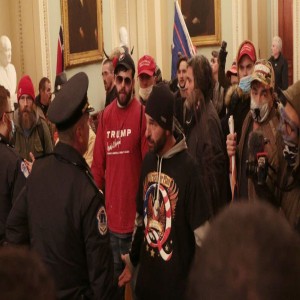
QAnon or simply Q, is a disproven and discredited American far-right conspiracy theory alleging that a secret cabal of Satan worshipping, cannibalistic pedophiles is running a global sex-trafficking ring and plotted against former President Trump while he was in office. QAnon is called a cult.
The conspiracy theory dates back to October 2017, when an anonymous post on a message board said extradition agreements had been struck with several countries "in case of cross border run" by Hillary Clinton, Trump's Democratic rival for the White House in 2016. (That run still hasn't happened.) The person or group behind the post eventually came to be known as "Q," which is where the conspiracy theory's name comes from.
Now I think that there has always been a need to belong. Some people are followers, so if something comes down the line that fits their belief system, they are likely to jump on the wagon. QAnon fits this to a "T". They hate the government, they don’t like Democrats, they want to bring back the Reich.
There have been many cults throughout history, and there will be more. Why, man’s need to have a common enemy. Man is tribal at the most primitive level. That is how early man survived. You must have a common enemy.
MSHair Private Studio
A hand made all-natural and organic hair oil
Save 10% with discount code:TWW
IG & FB @michelleswineyhair
http://www.Michelleswineyhair.com
Panel
Greg Coleman, NC
CEO of Illumination Media & Technology
FB: illuminationmediatech
IG: illuminationmediatech
TW: IlluminationMe1 & YouTube
Engineer at The Walt Weekly
Christopher Swiney, New Jersey
Host of Loud Chatter on Podbean & Chef
CEO of Johnny Ruth’s Catering
IG: Bigsween68
FB:Christopher Swiney
Gene Edwards
Male District Leader (D)
79th AD, The Bronx, NY
Fb: Gene Anthony Edwards Jr.
Ig: teamgene_
Ernest J. Robinson, Washington ,DC
Sergeant, US Marine Corp Combat Veteran
SR consultant @ B Ernest leadership and professional consultant
Fb: Ernest J Robinson
Steven A. Smith, ATL, GA
Educator, second chance business funding, credit specialist
http://Teachpracticemaster.com
Social media:
IG;stevenamithnycatl
fb;Steven A Smith

Sep 1, 2026
Sep 1, 2026
21 min
The Code of Family, Education, Voting, and Culture
Briggette Stokes returns to The Walt Weekly Podcast and joins Walter Latham for a wide-ranging conversation about family standards, dressing with pride, education, social media, voting, and the pressures facing Black communities. They connect old-school expectations to modern issues like school dress codes, technology addiction, and code switching, arguing that speaking differently at home and in professional settings is a survival skill and not something to be mocked.
Timestamps
00:00 - Welcome back and opening the family-code conversation
01:47 - Why school dress and public presentation still matter
04:02 - Clean clothes, clean socks, and family representation
05:26 - HBCU dress codes and the debate over school standards
07:18 - Cultural head wraps versus bonnets and bedroom slippers
08:40 - “White man’s way” versus Black pride and creativity
10:54 - Phones in classrooms and a preview of educator guests
12:09 - Clothing, distraction, and classroom expectations
14:41 - A mortgage company conversation turns to the word “woke”
16:25 - Black American identity and ancestral responsibility
18:23 - “I ain’t my ancestor” and what historical struggle means
20:18 - Grandchildren, old-fashioned values, and structure at home
22:50 - Education, trade skills, and why every job matters
24:40 - How social media and phones affect children’s brains
26:48 - Other countries restricting social media for minors
27:36 - Children melting down when phones are taken away
30:44 - North Carolina drivers, migration, and road culture
35:35 - Code switching, dialect, and speaking differently at home
40:24 - Grandma Martha’s advice to educate yourself
41:15 - Why Black people should not move away from education
45:16 - AI, job displacement, and the future of work
46:33 - Community college, trade school, and real-world preparation
47:23 - Don’t let young people settle for “turning chicken” forever
48:07 - Why boys often need more push than girls
49:55 - Voting, name discrepancies, and checking registration carefully
53:37 - Walt’s case for transactional voting and reparations
56:03 - Briggette’s view on putting pressure on elected officials
59:03 - Reparation on the platform, not just in conversation
61:16 - Voting access, suppression, and why restrictions matter
62:46 - HBCUs, polling access, and gentrification in Black neighborhoods
68:23 - Black women in media and the stereotype problem
73:21 - Mainstream portrayals and jealousy around Black beauty
74:28 - Black culture, borrowed language, and inherited traditions
75:25 - Soul food, Black culinary roots, and cultural inheritance
77:25 - What Briggette looks for in a partner
79:17 - Humor, attraction, and why she prefers Black men
Notable quotes
Action items
- Check voter registration details carefully, especially spelling and name matches on official documents.
- Follow up with elected officials instead of stopping at the vote.
- Limit children’s access to phones and social media, especially in schools.
- Treat education as a priority, whether through college, community college, or trade training.
- Encourage young men and women to understand how presentation, language, and behavior affect opportunities.

Aug 25, 2026
Aug 25, 2026
34 min
You can get a little free legal advice from the Taylor Law Firm? The first 10 people to ask a single question will get a free response from Aura Taylor!
When a family loses a loved one unexpectedly, the grief is only the beginning. For many African American families, the aftermath can become a second battle — navigating questions of accountability, financial security, and how to protect their family’s future.
Aura Taylor, known as “The Policy Limit Queen” and founder of The Taylor Law Firm, is available to discuss the legal realities behind wrongful death cases and what families need to know when tragedy strikes.
From high-profile cases involving Black Americans to everyday families facing devastating losses, wrongful death claims often raise important questions:
- How do families know when they have a legal claim?
- What steps should loved ones take immediately after an unexpected death?
- How are wrongful death settlements calculated?
- Why do some families struggle to receive fair compensation?
- How can families protect their financial future and generational wealth after losing a loved one?
Aura can provide insight into how wrongful death cases impact African American communities and explain why these lawsuits are about more than compensation — they are about accountability, stability, and ensuring families understand their rights.
She can also discuss how insurance companies evaluate claims, the challenges families face when going up against large institutions, and why having an advocate who understands the legal system is critical.
More Information on Aura Taylor of The Taylor Law Firm
After earning her MBA from Clayton State University and her law degree from Georgia State University College of Law, Taylor launched her own firm in 2018 with a mission to fight for injury victims while building a workplace culture centered on empathy, respect, and opportunity.
Today, her firm has recovered millions of dollars for clients while also becoming a rare example of female leadership in the legal field!
Originally born in the United States Virgin Islands and raised in Atlanta, Taylor’s passion for justice began when she was just 16 years old after watching her father struggle to receive fair compensation following a near-fatal car accident caused by a defective tire. The experience inspired her to pursue law and advocate for those who feel powerless against major corporations and insurance companies.
Contact Info.
Instagram: https://www.instagram.com/policylimitqueen/

Aug 11, 2026
Aug 11, 2026
13 min
Briggette Stokes and Walter Latham spend this episode unpacking what they call the “code of family” - the idea that how you present yourself, speak, and move in the world reflects your family, your culture, and your ancestors. The conversation moves from dress codes. It is personal, political, and rooted in Black community standards and survival.
- She explains her recent absence, says she is glad to be back, and introduces the episode’s main idea: the code of family and how it shapes behavior in public and private life.
Dress codes as cultural respect, not just rules
- Briggette argues that older generations expected children to leave home clean, presentable, and respectful, and that this standard still matters in schools and public life
Contact Us: